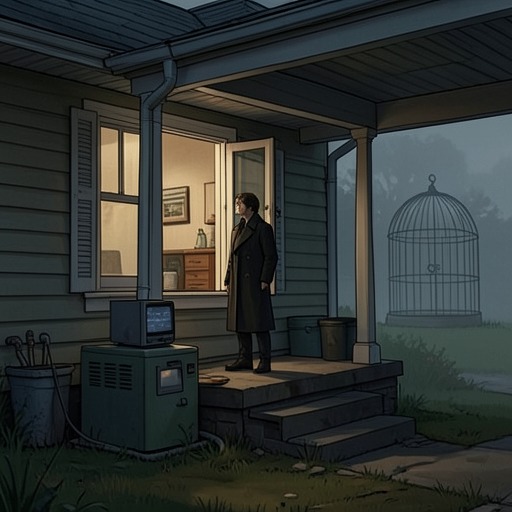
Eve Strong’s lingering trauma after abduction
The CageEve Strong’s lingering trauma after abduction is shown not as a danger that ended when she escaped, but as a continuing alteration in how she moves through ordinary life. A year after being held captive, she is back at work investigating violence against women, yet the possibility of another intrusion remains close: a creaking house can wake her in the small hours, and a case involving captive victims makes the past difficult to keep at a distance. Counselling and deliberate routines help, but neither restores an uncomplicated sense of safety.
The Abduction and Its Delayed Aftermath
A year earlier, a wannabe gangster and one of his associates had waited silently in the spare bedroom of Eve Strong’s house. They attacked after she had gone to bed and abducted her. She survived, largely because another local gangster intervened: he objected to the first man encroaching on his territory and threatening his authority. That is the official explanation for her survival, but Eve knows there was more to the situation, including history she has never told anyone. The account leaves that further history undisclosed rather than making it a fully explained part of her recovery.
During captivity, anger and instinct had kept Eve going. The fear became more pronounced after she was released, when the immediate struggle for survival was over. She feared a repeat abduction, being approached unseen, and being deprived of control over what happened to her. Her fears also included the possibility of being seriously harmed. This shift from action under pressure to fear in the aftermath gives the trauma its particular shape: escape ended the confinement, but it did not make her feel secure again.
Counselling has helped only to a point. At night, a board creaking or a joist cracking can still wake Eve with her heart pounding. The response is not confined to moments that resemble the original attack; ordinary noises in the house can be enough to bring the threat back into her awareness. Her difficulty settling therefore persists in the quiet intervals when no immediate danger is established.
Vigilance in Daily Life
Eve’s unease translates into specific habits. When she is in a room, she prefers to have a wall behind her and the door in front of her. She also keeps her phone and keys in her bag and takes the bag wherever she goes. Those objects have practical value: the phone could summon help, while the keys would let her enter or leave her house and drive her car. The routine is a form of preparation for having to flee, not evidence that she feels safe enough to forget the possibility.
The strain is visible even in a short transition between work and driving. After thinking about the case, Eve gets safely into her car and locks its doors. Her hands shake; although the shaking subsides, she gives herself several more minutes before turning the ignition. She is heading to Roker Police Station, near the mouth of the River Wear and the Marina, but first has to steady herself enough to continue. The pause makes the impact of the case measurable in time and gesture: reaching the car does not immediately end her distress.
Her vigilance also affects what she can comfortably hear and notice. Bill Nicol startles her at the scene where Louise Usher’s body was found. Eve’s reaction is sharpened by the knowledge that Louise, like her, had been held and tethered, but had not survived. The resemblance between their experiences turns a colleague’s sudden presence into a reminder of how close the investigation lies to Eve’s own history.
The Case as a Recurrence of Threat
Eve is investigating a series of murders in which women have been abducted and held. She wishes Louise Usher had lived, while trusting that Felix Carver will examine any evidence that might identify the killer and that her team will use it to pursue him. The professional task of seeking evidence and protecting others does not keep the victims’ experiences at a distance. Instead, the case repeatedly brings Eve into contact with circumstances that echo her own captivity, including the fact that Louise was tethered.
The parallel is especially unsettling because Eve’s survival and Louise’s death mark sharply different outcomes for women subjected to confinement. Eve knows that she was fortunate to escape alive; the investigation confronts her with someone who did not. Her response combines grief for the victim with the strain of recognition. The case is not simply a reminder of a completed personal ordeal: it places her in sustained contact with a present danger that her work requires her to understand and stop.
Later, the discovery that someone has entered Zoe Hardy’s house and moved or stolen her belongings brings the threat into a different form. At home that night, Eve takes even more care over security. The possibility that an intruder might have crept around while a woman was watching television or sleeping feels almost paralysing to her. Zoe’s home has not become a neutral crime-scene detail; the intrusion activates Eve’s fear of someone entering a private space without warning.
Attempts to Regain Control
After learning about the intrusion at Zoe Hardy’s house, Eve tries to manage the panic through a sequence of familiar actions. She runs for half an hour on the treadmill in her spare room, hoping the repetitive exercise will occupy her mind. It helps, but not completely. After showering and changing, she pours wine and turns on the television; the programme fails to distract her, and she can still feel panic close beneath the surface. She then uses the deep-breathing exercise she has been taught to help calm herself.
These measures show effort rather than a cure. Exercise provides some relief, while television and a drink do not keep the fear away; controlled breathing gives her another way to respond when it rises. In an earlier evening at home, the same struggle appears through small failures of attention: Eve reads without taking in the words, and the television does not hold her focus. She changes what she is doing, but distraction remains unreliable.
Her preparations also carry a tension between agency and fear. Keeping the phone and keys close, locking the car, choosing a position with a view of the door, and practising breathing are ways of acting within circumstances she cannot fully control. They allow her to continue with work and daily life, but their repetition also records how much effort ordinary security now demands.
Continuing Effects
Eve’s trauma remains unresolved in the material presented. Counselling has offered partial help; she has routines for practical safety and a breathing technique for panic; and she continues to investigate, even when the cases press painfully against her own experience. Yet nighttime noises still wake her, sudden movement can startle her, and news of an intrusion can bring fear close to the surface. The narrative thus presents survival as distinct from recovery: Eve escaped captivity, but the expectation that danger may return continues to shape her attention, her habits, and her work.